
Police Misconduct and the Boundaries of Law in Suriname


📍 The Incident
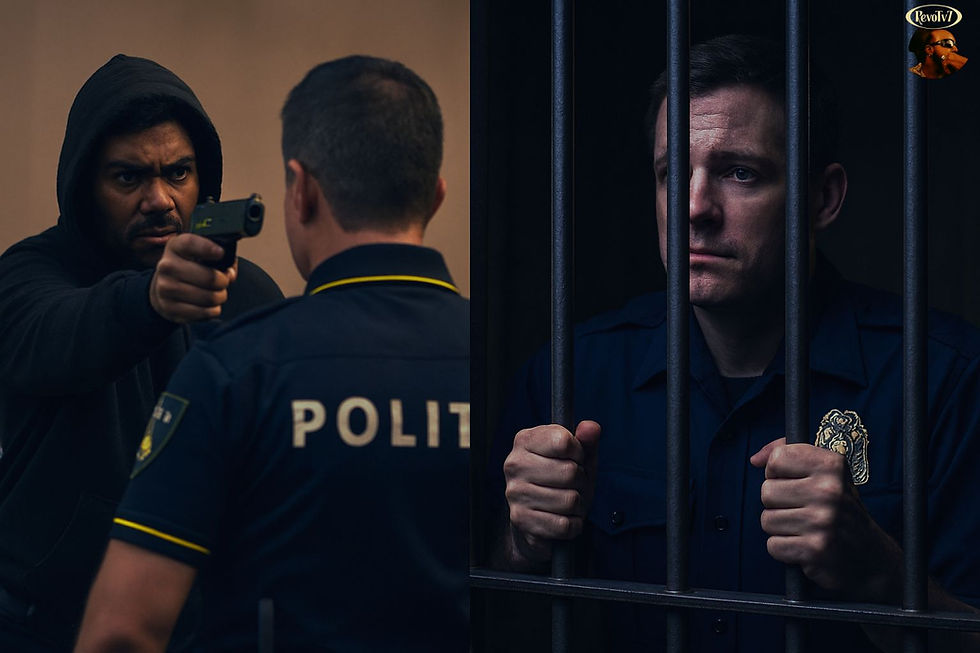
A recent police raid in Suriname has sparked outrage after officers manhandled a citizen who was not the intended suspect but his brother. The man, dressed only in a towel, resisted being cuffed on the ground. In the process, he was slapped and kicked, while one officer reportedly threatened him with the words: “I’ll kill you, motherf*er.” 😡 Such language and physical aggression have been widely condemned as unacceptable.
🔎 Background
It is important to note that the brother the police were originally after is being searched for a crime he committed. He is also known to be violent against police officers 👮⚠️. This explains why the raid was carried out with such tension and caution.
Still, it remains crucial that citizens who are not the intended suspect are treated with respect and in accordance with the law. The line between necessary enforcement and excessive violence must always be clearly upheld. ⚖️
⚖️ Legal Framework
Under Surinamese law, when police conduct a raid and order a citizen to kneel with hands behind the head and fingers interlocked, compliance is mandatory. Resistance is considered unlawful and can escalate the situation. In this case, the man’s refusal to obey the officers’ commands did constitute resistance, which is against the law.
However, the excessive force and verbal threats are a separate matter. These actions fall outside the boundaries of lawful policing and are now under review by Internal Affairs 🕵️♂️. The citizen’s father has filed a formal complaint and engaged a lawyer, seeking justice and compensation for the mistreatment 💼.
🧠 The Human Dimension
This incident cannot be viewed in isolation. Suriname’s financial system is under severe strain 📉, and the resulting stress affects not only ordinary citizens but also police officers. Officers carry the burden of protecting society, often under dangerous and emotionally taxing conditions. They are human too, facing personal struggles and systemic pressures 😔.
Yet, the responsibility of law enforcement is unique: they are entrusted with authority and power, and with that comes the duty to uphold dignity, restraint, and respect for human rights ✊. Violence and threats undermine public trust and erode the very foundation of justice ⚠️.
⚖️🤝 Balancing Accountability and Respect
This case highlights a delicate balance:
👥 Citizens must respect lawful police commands during raids to avoid escalation.
👮 Police officers must exercise restraint, professionalism, and humanity, even under stress.
🏛️ Internal Affairs must ensure accountability when officers cross the line, reinforcing public confidence in the system.
🕊️ Conclusion
We hope that justice is served for the citizen who was wrongfully mistreated, and that compensation is provided where due 💰. At the same time, society must recognize the sacrifices police officers make daily. Without them, chaos would reign 🔥.
Respect must flow both ways: citizens obeying lawful orders, and officers upholding the dignity of those they serve 🤝. Suriname’s future depends on this balance—justice with humanity, authority with accountability, and above all, a shared commitment to safety and respect ❤️.

Comments